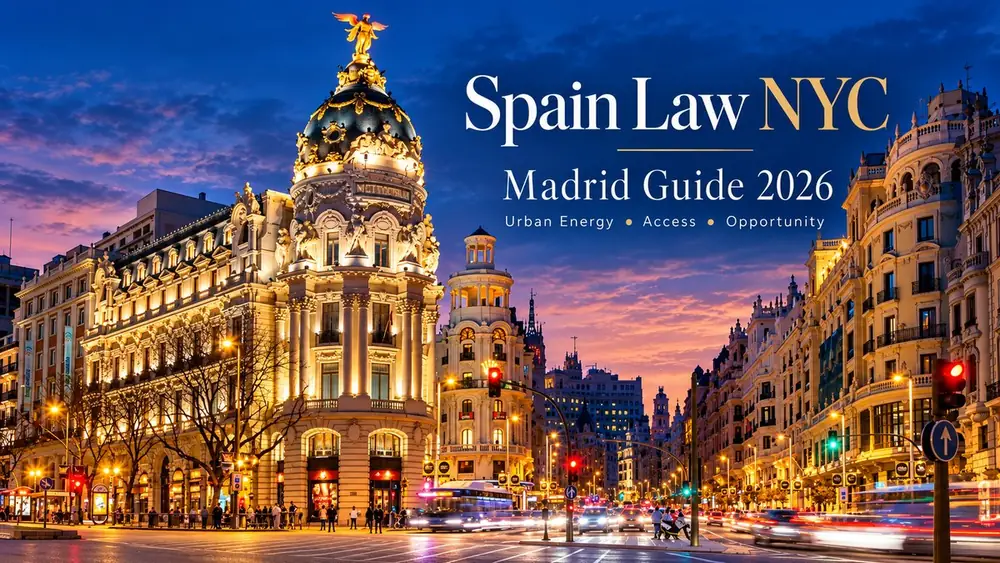
Living in Spain · Madrid

Living in Madrid as an American: what daily life is really like in 2026

Madrid works especially well for Americans who want dense, walkable big-city life, one of Spain's strongest transport hubs, major cultural and university institutions, a deep restaurant scene and unusually strong air connections with the United States. The main trade-offs are housing cost, very hot and dry summers, cold winter nights, urban noise and the absence of a coast.

Compared with New York City, Madrid generally feels smaller, less vertical and less intense, while still supporting a car-light routine in many neighborhoods. Compared with Tenerife or the Canary Islands, it offers a much larger mainland employment, rail and cultural ecosystem, but not the islands' ocean access or mild coastal winter climate.

Last reviewed: October 4, 2026. Housing and travel indicators are dated because rents, fares and flight schedules change.

Direct answer

Madrid at a glance for Americans

Madrid is Spain's capital and a large inland European city with a strong public-transport network, four distinct seasons, high housing demand in central districts and direct long-haul links to the United States. It is a particularly strong fit for people who value urban culture, restaurants, business access, universities, walkability and easy travel around mainland Spain.

Madrid at a glance, reviewed October 2026
Factor Current context
Population3,497,277 registered residents as of January 1, 2026.
International population30.5% of city residents were born outside Spain at January 1, 2026. Nationality and place of birth are different measures.
RegionCity and capital of the Community of Madrid; also the national capital of Spain.
ElevationAEMET's Madrid-Retiro reference station sits at 667 m / 2,188 ft, helping explain the large day-night and seasonal temperature range.
ClimateHot, dry summers; cooler winters with cold nights; relatively low annual rainfall compared with many Atlantic climates.
AirportAdolfo Suárez Madrid-Barajas (MAD), with 219 destinations and 96 airlines listed by Aena at this review date.
Urban transportMetro, EMT buses, Cercanías, interurban buses and light rail form an integrated regional network.
2026 Zone A transport pass€32.70 for the standard 30-day Zone A pass under the 2026 discounted fare program.
September 2026 asking rent€24.30/m²/month citywide on idealista. This is an advertised asking-rent indicator, not an official government rent or a guaranteed signed-contract price.
LanguageSpanish is the practical language of daily life and administration. English is easier to encounter in international business, tourism and university settings, but should not be assumed everywhere.
Best fitUrban professionals, families who want large-city services, students, culture-focused retirees, remote workers who value connectivity, and people who prefer mainland city life over island or coastal living.
Main trade-offsHigh central rents, hot summers, winter temperature swings, noise in nightlife districts, smaller historic apartments and no beach.
Primary data: Ayuntamiento de Madrid population data, CRTM 2026 fare information, and idealista asking-rent market data. Asking-rent data is a private market indicator, not an official rent register.
Spain Law NYC Madrid at a Glance graphic over an aerial view of central Madrid and Retiro Park.
Madrid's scale becomes clearer from above: a dense urban core, large green spaces and a metropolitan footprint that feels materially different from both New York and Spain's island destinations.

Geography & connectivity

Where Madrid sits changes how you can use Spain

Madrid is near the geographic center of the Iberian Peninsula and functions as Spain's principal national transport hub. For a resident, that matters more than the tourism map: high-speed rail, Barajas airport and radial road links make weekend or work travel to other parts of mainland Spain unusually practical.

Toledo, Segovia and Ávila are realistic regional excursions, while high-speed rail connects Madrid with cities including Barcelona, Valencia, Seville and Málaga. Salamanca is also accessible by rail or road. The exact journey time depends on the service and station, so residents should check Renfe or the relevant operator rather than rely on a fixed travel-time promise.

Why this matters if you are relocating

  • Mainland reach: many major Spanish cities are practical by high-speed rail without flying.
  • U.S. access: Madrid has a broader direct U.S. route network than most Spanish destinations.
  • No coast: beach life requires travel; Madrid's outdoor strengths are parks, urban walking and nearby mountain/countryside access.
  • High plateau: altitude contributes to dry air, strong sun and noticeable day-night temperature changes.

Climate

Madrid weather in °C and °F: sunnier and drier than New York, but not mild year-round

AEMET's 1981–2010 normals for Madrid-Retiro show an annual mean of 15.0°C / 59.0°F. January averages 6.3°C / 43.3°F and July 25.6°C / 78.1°F, but those monthly means hide the practical contrast: average July daytime highs reach 32.1°C / 89.8°F, while January nights average 2.7°C / 36.9°F. Snow is occasional rather than a defining winter feature.

AEMET Madrid Retiro climate normals
Period Mean Average daily high Average daily low Average precipitation
January6.3°C / 43.3°F9.8°C / 49.6°F2.7°C / 36.9°F33 mm
April12.9°C / 55.2°F18.2°C / 64.8°F7.7°C / 45.9°F45 mm
July25.6°C / 78.1°F32.1°C / 89.8°F19.0°C / 66.2°F12 mm
August25.1°C / 77.2°F31.3°C / 88.3°F18.8°C / 65.8°F10 mm
October15.1°C / 59.2°F19.4°C / 66.9°F10.7°C / 51.3°F60 mm
Annual15.0°C / 59.0°F19.9°C / 67.8°F10.1°C / 50.2°F421 mm

Source note: AEMET Madrid-Retiro climate normals use the 1981–2010 reference period. Climate normals are long-run context, not a forecast. The same station records an average 3.6 snow days per year. Heat waves can push temperatures well beyond monthly normals.

Madrid vs New York climate

NOAA/National Weather Service Central Park normals place New York's January mean at 33.7°F and July mean at 77.5°F. Madrid's July mean is similar, but its average daytime high is hotter and its summer humidity is generally lower. Madrid's January mean is milder, yet cold nights remain normal. Because the official normal periods differ, this is a practical comparison rather than a laboratory-equivalent dataset.

What newcomers often underestimate

Summer sun and dry heat can make midday walking unpleasant during hot spells; air-conditioning is therefore a meaningful housing feature. In winter, older apartments can feel colder than the outdoor temperature suggests if insulation, windows or heating are weak. Spring and autumn can change quickly between warm afternoons and cool nights.

Neighborhoods

Where to live in Madrid: choose the routine, not a universal “best neighborhood”

Madrid's neighborhoods can feel materially different even when they are only a few Metro stops apart. The right choice depends on commute, school, noise tolerance, apartment size, nightlife, park access and whether you want historic-center intensity or a quieter residential pattern.

Comparison of Madrid neighborhoods for international residents
Area Profile Atmosphere Transport / walkability Housing pattern Nightlife Families / international fit Main trade-off
SalamancaPremium central residentialPolished, shopping and dining focusedExcellentClassic apartments; premium addressesRestaurants and bars, less chaotic than CentroStrong for professionals and families with budgetAmong the city's highest asking rents
ChamberíCentral residential all-rounderTraditional, local, restaurant-richExcellentOlder character buildings; varied apartment sizesActive but generally less tourist-heavyStrong mixed profileHigh demand and older-building compromises
RetiroPark-oriented central residentialCalmer, greener, establishedExcellentTraditional apartments near major green spaceQuieterAttractive for families and quieter routinesPrice and less late-night energy
CentroMaximum centralityHistoric, dense, busy, visitor-heavy in partsOutstandingOlder, often smaller apartmentsVery highStrong for urban-first residentsNoise, tourism and housing quality vary block by block
MalasañaCreative central lifestyleCafés, design, dense street lifeExcellentOlder central stockHighBetter for people who value energy over quietNoise and smaller apartments
Chueca / JusticiaCentral dining and social lifeCosmopolitan, stylish, activeExcellentHistoric and renovated stockHighStrong international-city feelPrice and nightlife noise
LavapiésDense central multicultural quarterInformal, arts-oriented, variedExcellentOlder stock; quality variesHigh in partsGood for residents seeking central diversityStreet-by-street noise and housing variation
La LatinaHistoric social MadridTapas, plazas, weekend energyExcellentOlder central apartmentsHigh on key streetsStrong for social city livingCrowds and noise
Argüelles / MoncloaResidential + university accessLively but more functionalExcellentBroad mixModerateUseful for students, families and west-side accessLess postcard-historic than Centro
ChamartínNorth-side residential/businessQuieter, establishedStrong, but exact micro-location mattersOften larger than old-center stockLowerGood family/professional profileLess spontaneous old-center street life
El Viso / Nueva EspañaUpper-end quiet residentialLow-key, spacious by central standardsGood, location dependentLarger apartments and some low-rise housingLowStrong for families with higher budgetPrice and less urban buzz
Arturo SoriaEast-side family residentialLower density, calmerGood but car usefulness rises in some pocketsLarger homes/apartments more availableLowFamily-orientedLess walk-everywhere than the inner core
Conde Orgaz / HortalezaFamily and suburban-urban mixQuiet, residentialVaries significantly by addressMore space and newer stock in placesLowUseful when school/space outranks centralityCommute and car dependence can increase
Madrid Río / ArganzuelaPark/river-corridor urban livingRecreational, increasingly residentialStrongMix of traditional and newer/renovated stockModerateStrong for active and family routinesNot as centrally historic as Centro

Salamanca vs Chamberí vs Retiro vs Centro

These four areas answer different versions of “I want to live centrally.” Salamanca prioritizes polish and premium convenience; Chamberí balances neighborhood feel and centrality; Retiro prioritizes green space and a calmer rhythm; Centro maximizes walking access to historic Madrid, culture and nightlife.

Factor Salamanca Chamberí Retiro Centro
FeelPremium / polishedResidential / localGreen / calmHistoric / intense
WalkabilityExcellentExcellentExcellentOutstanding
Park accessGood east-side accessLocal parks / west access variesExcellent — Retiro is definingLimited inside district; easy transit/walk outward
RestaurantsExcellent, often higher-endExcellent neighborhood mixStrongMaximum variety and visitor density
NightlifeModerateModerate-highLowerHigh
Family fitStrong with budgetStrongVery strong for park-oriented routineDepends heavily on exact street/noise
September 2026 district asking rent€29.5/m²€26.8/m²€24.8/m²€27.4/m²
Airport practicalityStrong east-side positionStrong via transit/taxiStrong east-side accessStrong but central traffic can matter
Main compromisePricePrice + older buildingsPrice + quieter nightlifeNoise + tourism + housing variability

Cost of living · 2026

The Madrid cost question starts with housing, not a universal monthly budget

A single “monthly cost of living in Madrid” number is usually misleading. Housing varies sharply by district, household size and lease type; utilities depend on season and apartment efficiency; dining and leisure depend on lifestyle. The most defensible approach is to separate current market indicators from variable personal spending.

Category October 2026 planning indicator How to interpret it
Citywide advertised rent€24.3/m²/monthidealista, September 2026 asking-rent indicator; not an official rent or signed-contract guarantee.
Premium central districtsSalamanca €29.5; Centro €27.4; Chamberí €26.8; Retiro €24.8 per m²/monthDistrict averages hide large street, building and furnishing differences.
Zone A 30-day public transport pass€32.70Official 2026 CRTM discounted fare; current program runs through December 31, 2026.
Utilities for an 85 m² apartment~€168/monthNumbeo October 2026 collaborative snapshot for electricity/heating/cooling/water/waste; real bills vary materially.
Home internet~€31/monthNumbeo collaborative snapshot; provider and bundle matter.
Inexpensive restaurant meal~€16Numbeo collaborative snapshot; Madrid spans inexpensive neighborhood menus to high-end dining.
Mid-range meal for two~€60Numbeo collaborative snapshot for three courses; highly lifestyle dependent.
Gym membership~€45/monthNumbeo collaborative snapshot; low-cost and premium clubs can fall well outside this figure.
GroceriesExamples: milk ~€1.24/L, eggs ~€3.70/dozen, chicken ~€8.32/kgNumbeo collaborative October 2026 snapshot. Use as orientation, not a household budget.

Spain's official CPI is useful for tracking price inflation, but it is not a Madrid household budget calculator. For relocation planning, use current listings, actual school/insurance quotes where relevant, and a realistic sample of your own spending.

Housing: the apartment itself can matter as much as the neighborhood

Madrid's central housing stock includes many older buildings. A beautiful location does not guarantee modern insulation, an elevator, central air-conditioning or quiet bedrooms. Newcomers should inspect the building and unit rather than choosing only from the map.

Furnished and temporary rentals can carry different pricing and contract conditions from conventional long-term housing. Deposits, guarantees, agency involvement and competition depend on the transaction and market segment. Those legal details should be assessed separately from this destination guide.

Practical viewing checklist

  • Elevator and accessibility, especially in historic buildings.
  • Air-conditioning and the number of cooled rooms.
  • Heating type, windows and insulation for winter.
  • Exterior vs interior orientation, natural light and summer solar exposure.
  • Bedroom position relative to bars, traffic, schools or late-night streets.
  • Terrace/balcony usability rather than just its presence in a listing.
  • Furnished vs unfurnished inventory and actual storage.
  • Commute to work, school and airport at the times you will really travel.
Spanish property legal services for U.S. buyers

Getting around

Do you need a car to live in Madrid?

For most people living in Madrid's well-connected urban neighborhoods, no.

The regional system combines Metro, EMT city buses, Cercanías suburban rail, interurban buses and light rail. Walking also handles a meaningful share of central daily life. A car becomes more useful when your routine is tied to peripheral housing, a particular school or workplace, frequent regional trips, or locations with weak cross-city public transport.

Metro

Dense urban coverage and frequent use for central/northern/eastern commuting. Exact convenience depends on line changes and station distance.

EMT buses

Important for crosstown and neighborhood trips where the Metro grid is less direct.

Cercanías

Useful for suburban/regional commuting and major nodes; service conditions should be checked for the actual route.

Walking & cycling

Central Madrid is highly walkable. Cycling is improving but topography, heat, traffic and route quality make it less uniformly effortless than walking.

Madrid-Barajas & the U.S.

Madrid is one of Spain's strongest bases for maintaining U.S. connectivity

Aena currently lists 219 destinations and 96 airlines at Adolfo Suárez Madrid-Barajas. Its current destination schedule includes nonstop U.S. service to cities such as New York-JFK, Newark, Boston, Miami, Chicago, Dallas, Philadelphia, Washington Dulles, Atlanta, Charlotte, Los Angeles and Orlando.

Airline schedules are seasonal and can change, so “direct” should always be verified for your travel dates. The practical advantage is structural: Madrid offers more U.S. nonstop options than many Spanish destinations and also connects efficiently onward across Europe and Spain.

Airport access from the city

  • Metro Line 8 links the airport corridor with the city transport network.
  • Cercanías serves Terminal 4 from key rail nodes.
  • Airport buses and taxis provide additional direct options.
  • East/northeast Madrid can be especially convenient for frequent flyers, but a central neighborhood may still offer a simple airport journey.

Daily life

Spain Law NYC Madrid Guide 2026 graphic over Gran Vía and the Metropolis building at blue hour.
Gran Vía captures Madrid's late urban rhythm: dense central streets, architecture, transit and evening activity in a compact walkable core.

What everyday life in Madrid can feel like

Madrid is not simply a collection of monuments. Its strongest relocation case is the everyday urban ecosystem: walking to cafés and shops, using public transport instead of planning around a car, eating later than in the United States, spending time in public space and having major cultural institutions woven into normal city life.

Parks & outdoor routine

Retiro, Madrid Río and Casa de Campo make urban walking, running and recreation realistic without leaving the city. Summer heat changes the best time of day to use them.

Art & culture

The Prado, Reina Sofía and Thyssen-Bornemisza anchor a museum ecosystem alongside theaters, galleries, concerts and neighborhood cultural venues.

Street life

Terraces, plazas, cafés and late dinners can make social life feel more public and spontaneous than in many U.S. cities.

Food culture

Tapas culture sits alongside cocido madrileño, bocadillos de calamares, vermut, markets and a broad international restaurant scene. “Sobremesa” — staying at the table after eating — can be as noticeable as the food itself.

Shopping & services

From neighborhood food shops to Gran Vía and premium retail in Salamanca, Madrid supports a deep urban service economy rather than a resort-season pattern.

Nightlife

Nightlife ranges from neighborhood bars to clubs and late dining. For residents, the same energy can become a housing-noise problem, so visit a prospective street at night before signing.

Spain Law NYC Madrid Lifestyle graphic over the Crystal Palace and lake in Retiro Park.
Retiro is one of Madrid's clearest quality-of-life assets: a large central park that makes walking, shade and outdoor time part of an ordinary city routine.

Health, air and outdoor life: practical benefits without medical promises

A walkable city and extensive parks can make routine physical activity easier to incorporate into daily life. That is a lifestyle feature, not a medical treatment. Madrid's strong sun, summer heat, dry air, urban pollution episodes and seasonal pollen can all affect comfort and health differently for different people.

The Ayuntamiento publishes monthly air-quality reporting, and the Community of Madrid operates the Palinocam pollen monitoring network. People with respiratory, allergy or heat-related concerns should use current official alerts and individual medical advice rather than assume Madrid's climate is inherently beneficial.

Healthcare: availability is not the same as entitlement

Madrid has extensive healthcare infrastructure, including large public hospitals in the Servicio Madrileño de Salud network and a substantial private healthcare market. Major public centers in the capital include La Paz, Gregorio Marañón, 12 de Octubre and Clínico San Carlos, among others.

Do not infer automatic public-healthcare eligibility from physical availability. Access rights, registration requirements and private-insurance obligations depend on a person's legal and coverage situation. Those questions belong in the relevant residence and insurance analysis.

International Madrid

Americans are part of a much broader international city

Madrid's municipal register counted 1,065,198 residents born outside Spain at January 1, 2026 — 30.5% of the city's population. The United States was also among the countries generating a significant share of new external arrivals during 2025. That supports describing Madrid as internationally connected, but it does not justify inventing a city-level count of U.S. residents where the source does not provide one.

At regional level, official 2025 data recorded 14,240 U.S. nationals in the Community of Madrid. That is a regional figure, not a count for Madrid city. The practical international ecosystem also includes students, multinational employers, embassies, consulting, finance, technology and multiple universities.

Universities

The Community has six public universities and a much larger public/private higher-education ecosystem. Regional authorities report more than 300,000 university students and a significant international cohort.

Families & schools

The region offers public, publicly funded concertado and private schools, including bilingual options. Families should choose housing after checking a specific school's location, admissions pathway and commute rather than assuming all “international” options cluster in central Madrid.

Language reality

An English-speaking professional can function in many international settings, but Spanish remains central to neighborhood life, administration, healthcare interactions and long-term integration.

Spain Law NYC Modern Madrid graphic over the Cuatro Torres business district skyline at dusk.
Modern Madrid extends far beyond the historic center. The northern business district illustrates the city's corporate scale, infrastructure and professional connectivity.

Who Madrid tends to work for

Business & entrepreneurship

As Spain's capital, Madrid concentrates corporate headquarters, legal and consulting services, finance, technology, public institutions and international business networks. That can make it a stronger base than a smaller destination if local professional connectivity matters.

This lifestyle advantage is separate from immigration or tax eligibility. Do not infer a special Madrid tax benefit from choosing the city.

Remote work

Madrid combines high-capacity urban connectivity, coworking options, direct flights, networking and a Central European time-zone pattern. For U.S.-based teams, the time difference can create productive morning focus time but pushes East Coast overlap toward late afternoon/evening and West Coast overlap later still.

Compared with Tenerife, Madrid offers a denser corporate network and mainland transport hub; Tenerife offers a milder coastal climate and different lifestyle trade-offs.

Digital Nomad Visa legal assistance

Retirement

Madrid can suit retirees who prioritize major hospitals, museums, restaurants, public transport, direct U.S. flights and an active city rather than a beach or resort environment. It is less compelling if the priority is quiet coastal living, mild winter weather or low housing costs.

The main practical trade-offs are rent, summer heat, urban noise, cold winter nights and the pace of a capital city.

Families

Families can benefit from parks, public transport, extensive school choice and large-city services. The housing decision is often driven by the school commute and apartment size more than by a desire to be within walking distance of Puerta del Sol.

Central areas maximize independence for older children and adults using transit; outer residential areas can offer more space but may make daily logistics more car-dependent.

Compare Mediterranean city life

Madrid or Barcelona?

Choose Madrid if national-capital scale, dry summers, central Spanish rail geography and the broadest U.S. air connectivity matter most. Choose Barcelona if Mediterranean beach access, a coastal climate and Catalonia's bilingual/international city environment fit your routine better.

Compare neighborhoods, beaches, housing, climate and daily life in Barcelona →

Madrid vs New York City for daily life

The useful comparison is not “which city is better?” but which trade-offs fit your routine.

FactorMadridNew York City
Urban scaleLarge European capital but more compact-feeling coreMuch larger metropolitan intensity and vertical scale
WalkabilityExcellent in central districtsExcellent in many neighborhoods
Public transportMetro + bus + Cercanías; car-light routine realisticSubway + bus + commuter rail; car-free routine common
HousingHigh by Spanish standards; older stock common centrallyGenerally much more expensive, with huge neighborhood variation
ClimateDry; hotter summer afternoons; cooler/cold winter nightsMore humid; colder winter mean; summer mean similar but more humid
Meal scheduleLunch/dinner often later; long social meals commonEarlier and faster on average, with enormous variety
Green spaceRetiro, Casa de Campo, Madrid Río integrated into urban routineMajor parks including Central Park plus waterfront greenways
U.S. flightsStrong nonstop network from MADGlobal hub with broader overall long-haul network
LanguageSpanish essential for full integrationEnglish dominant; exceptionally multilingual city
NightlifeVery late dining and nightlife cultureLarge, diverse, neighborhood-specific nightlife
CarUsually unnecessary in well-connected city neighborhoodsUsually unnecessary in transit-rich neighborhoods

Madrid vs Tenerife and the Canary Islands

Madrid and Tenerife can both work for Americans, but they solve almost opposite lifestyle problems. Madrid is the stronger choice when mainland connectivity, big-city services, culture, corporate networks and direct U.S. travel dominate. Tenerife is stronger when ocean access, outdoor nature and a mild coastal climate dominate.

FactorMadridTenerife / Canary context
SettingMainland capitalAtlantic island / archipelago
ClimateFour seasons; hot dry summers; cold winter nightsMuch milder coastal temperatures; major microclimates by island/altitude
OceanNo coastCore lifestyle feature
Transport hubSpain's strongest national rail/air positionAir/sea dependent for off-island travel
U.S. connectivityMultiple current nonstop U.S. destinationsU.S. travel normally requires a connection
Employment / business ecosystemLarge corporate, professional and government centerSmaller island economy with tourism/services and specific regional opportunities
Indirect tax contextMainland Spanish VAT (IVA) frameworkCanary Islands use IGIC; ZEC exists only for qualifying Canary structures
HousingHigh citywide demand with premium central rentsVaries sharply by island and resort/urban area; some Tenerife resort zones are expensive
Car dependenceLow in many city neighborhoodsMuch more location-dependent; rural/dispersed island routines often favor a car

Frequently asked questions about living in Madrid

Is Madrid a good city for Americans?

It can be an excellent fit for Americans who want walkable urban life, public transport, culture, universities, business networks and strong U.S. air connectivity. It is a weaker fit if your priorities are beach access, mild winters, very low housing costs or a quiet small-city routine.

Do I need a car to live in Madrid?

Usually not if you live in a well-connected city neighborhood. Metro, EMT buses, Cercanías and walking can cover most daily routines. A car becomes more useful for peripheral housing, certain schools/workplaces and frequent regional travel.

How expensive is Madrid in 2026?

Housing is the main pressure point. idealista's September 2026 citywide advertised asking-rent indicator was €24.3/m²/month, with premium central districts materially higher. Transport remains comparatively predictable; groceries, utilities, dining and leisure vary by household.

What are the best neighborhoods in Madrid for Americans?

There is no universal best area. Salamanca suits a premium polished routine; Chamberí balances centrality and neighborhood life; Retiro prioritizes park access; Centro maximizes historic walkability and nightlife; Chamartín and eastern/northern residential areas can work better for families seeking space.

Does Madrid have direct flights to the United States?

Yes. Aena's current schedule lists multiple nonstop U.S. destinations, including both JFK and Newark as well as Miami, Boston, Chicago, Dallas, Philadelphia, Washington and others. Routes can be seasonal or change, so verify the actual travel date.

Is Madrid good for retirees?

It can be strong for retirees who want major-city healthcare infrastructure, museums, restaurants, transit and direct flights. Rent, summer heat, winter cold and urban noise are the main lifestyle trade-offs. Residence eligibility is a separate legal question.

Is Madrid good for remote workers?

Yes for many remote professionals: the city offers strong connectivity, coworking, air links and networking. The practical issue for U.S. teams is the time-zone overlap, especially with the West Coast. Remote-work immigration eligibility belongs to the Digital Nomad Visa page.

Madrid or Tenerife: which is better to live in?

Choose Madrid for mainland connectivity, big-city culture, jobs, rail, business and direct U.S. flights. Choose Tenerife for ocean access, nature and a milder coastal climate. Housing and transport trade-offs vary within both destinations.

Can an American automatically use Madrid's public healthcare system?

No assumption should be made from the presence of hospitals alone. Madrid has extensive public and private healthcare infrastructure, but an individual's entitlement or insurance obligation depends on legal and coverage circumstances.